I hope you find this blog helpful as you plan your crowdfunding journey. If you’d like personalized support or expertguidance to help make your campaign a success, click here
Author: Adebayo Ogungbemile | Founder of Boostfunders
If you’ve ever launched a Kickstarter campaign and wondered why some projects explode while others barely get noticed, the answer usually isn’t the product.
It’s the algorithm.
Kickstarter doesn’t show every project equally. Instead, it uses performance signals to decide which campaigns deserve visibility and which ones quietly fade into the background.
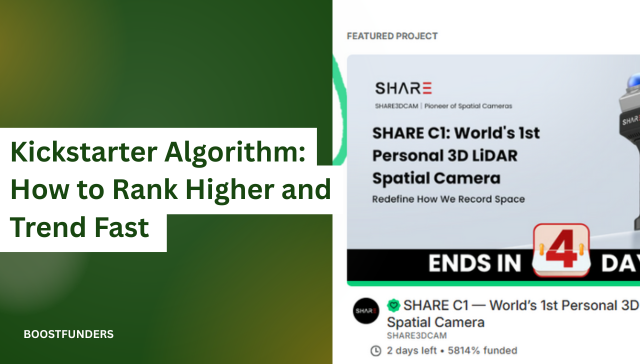
Understanding how this system works and how to work with it is the difference between launching into silence and landing on Trending.
This guide breaks it down in plain language and shows you how creators actually rank higher and trend faster on Kickstarter.
Key Takeaways
- Kickstarter prioritizes momentum over product quality alone.
Even great ideas can fail if they don’t generate early performance signals. Visibility is earned through action, not potential.
- Funding speed is one of the most important ranking factors.
Campaigns that reach 100% quickly are rewarded with discovery placement and trending opportunities.
- Backer volume sends stronger signals than large pledges.
More supporters indicate a broader appeal, which Kickstarter’s algorithm favors.
- Prelaunch preparation determines launch-day success.
Most campaigns that rank well do so because momentum was built before launch, not after.
- Consistent activity keeps campaigns visible.
Daily engagement, updates, and pledges help maintain algorithmic trust throughout the campaign.
- External traffic strengthens algorithm confidence.
When outside audiences convert into backers, Kickstarter increases internal exposure.
What is an Algorithm?
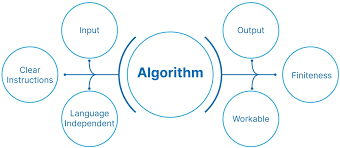
An algorithm is a set of rules or instructions that a system follows to process data and make decisions. They act as the digital world’s genetic makeup, dictating to machines what, how, and when to make decisions. Any set of instructions or finite rules that allows for calculations and solving problems is an algorithm.
In the digital world, algorithms decide:
- What content people see
- In what order it appears
- And how often it’s promoted
Search engines, social media platforms, marketplaces, and crowdfunding platforms all rely on algorithms to filter and rank content based on performance signals.
According to Investopedia, an algorithm is “a set of instructions designed to perform a specific task” often used to automate decisions at scale
What Is a Platform Algorithm?
A platform algorithm is how a specific website decides which content deserves more visibility than others. Instead of showing everything in chronological order, these algorithms analyze factors like past behavior, engagement signals, and content relevance to serve you what you’re most likely to enjoy or interact with.
For example:
- Google ranks search results
- Instagram ranks posts in your feed
- YouTube ranks videos
- Kickstarter ranks campaigns
These algorithms usually evaluate signals like:
- Engagement (clicks, shares, comments, conversions)
- Speed of activity (how fast people act)
- Consistency of performance
- Relevance to users
The goal is always the same: promote content that performs well and keeps users engaged.
HubSpot explains this clearly when discussing how algorithms prioritize high-performing content across platforms.
Algorithmic Discovery vs Editorial Features on Kickstarter
One common misconception among creators is that the Kickstarter algorithm controls everything, including featured badges like Project We Love. That’s not entirely true.
Kickstarter uses two separate systems to surface projects:
- Algorithmic discovery
- Editorial curation
Understanding the difference is critical.
What the Kickstarter Algorithm Actually Controls
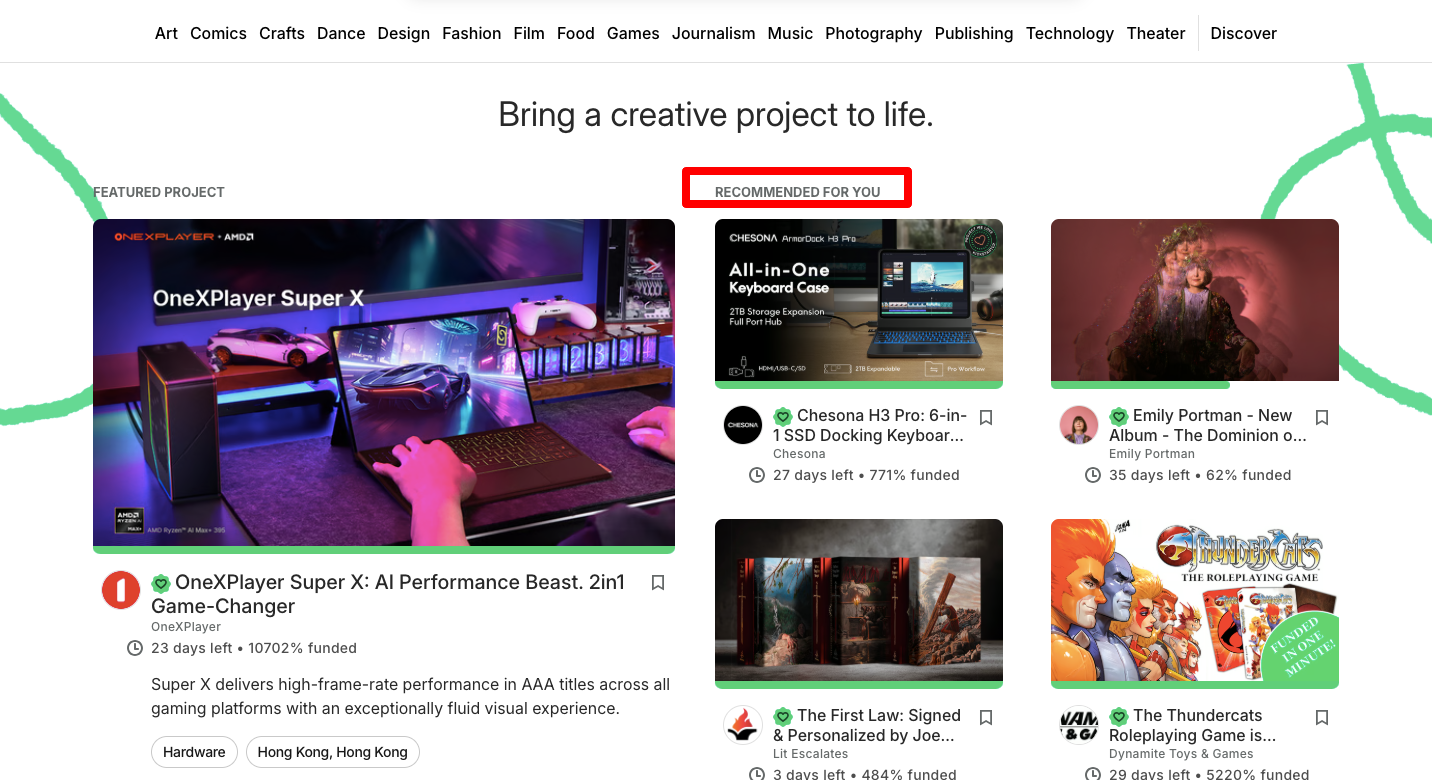
According to Kickstarter, most projects are shown to users through personalized discovery sections such as “Recommended for you.”
These recommendations are generated algorithmically based on:
- A user’s prior search terms
- Browsing history
- Past project backings
- On-site interactions and engagement
This means that even if your project is never manually featured, it can still reach thousands of potential backers through algorithm-driven recommendations.
What the Kickstarter Algorithm Does Not Control
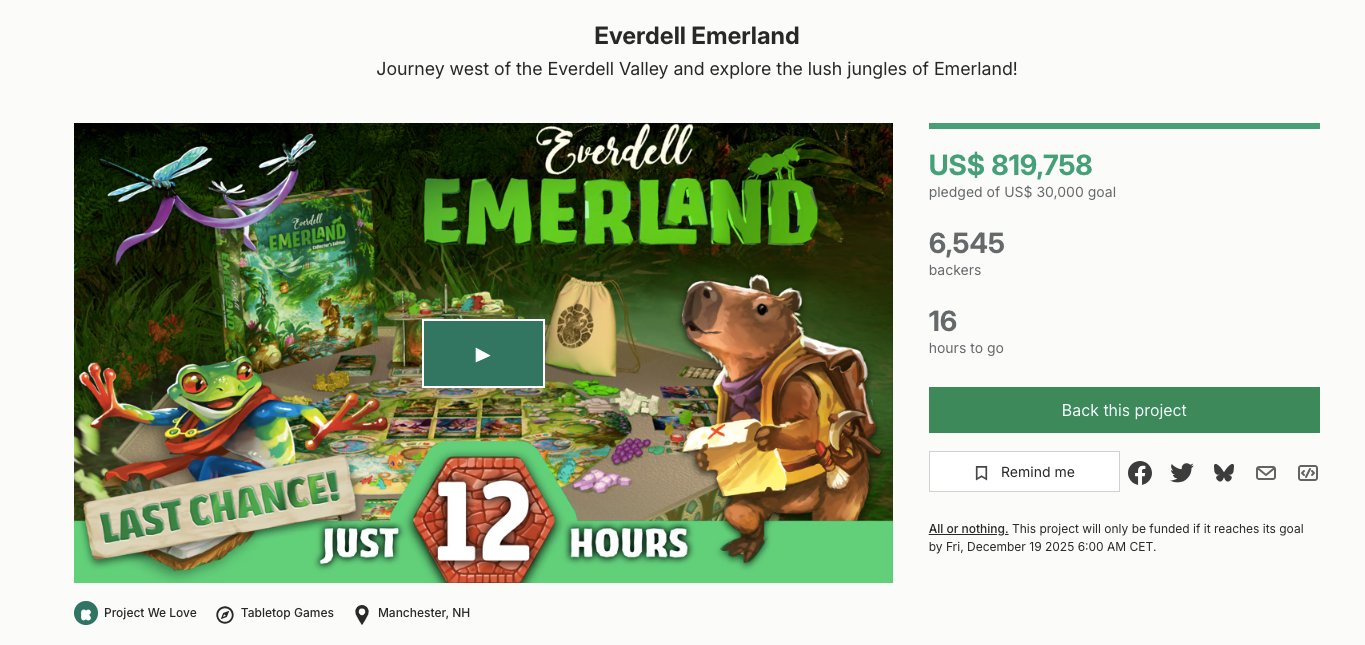
Kickstarter is very clear that badges like Project We Love and featured placements are editorial decisions, not algorithmic rewards.
From Kickstarter’s own words:
- There is no secret formula to be selected
- Projects are reviewed manually by internal teams
- Being featured is not required for success
In fact, Kickstarter explicitly states that being featured is not the secret to a successful campaign.
This distinction matters because many creators chase features instead of focusing on what actually drives results: backers, momentum, and conversions.
Why This Still Supports Algorithm-Based Ranking
While editorial features are manual, algorithmic discovery still depends heavily on performance signals.
Unlike social media algorithms that prioritize likes or comments, Kickstarter’s algorithm is conversion-focused.
In simple terms, Kickstarter promotes campaigns that:
- Raise money quickly
- Attract many backers
- Show strong early momentum
are more likely to appear in personalized recommendation feeds even without being officially featured.
This reinforces why pre-launch strategy, external traffic, and page optimization are essential to triggering visibility on Kickstarter.
How the Kickstarter Algorithm Really Works
Kickstarter’s algorithm is designed to protect the platform.
It wants to surface campaigns that:
- People clearly want
- Convert visitors into backers
- Maintain momentum over time
That’s why Kickstarter prioritizes performance, not promises.
If your campaign shows strong early signals, the platform rewards you with more exposure. If it doesn’t, Kickstarter won’t step in to save it.
1. Funding Speed: The Strongest Ranking Signal
One of the clearest signals Kickstarter looks at is how fast you reach your funding goal.
A campaign that hits 100% in:
- a few hours
- the first 24 hours
- or within the first 72 hours
is immediately flagged as high-demand.
Campaign example (from a campaign we promoted):
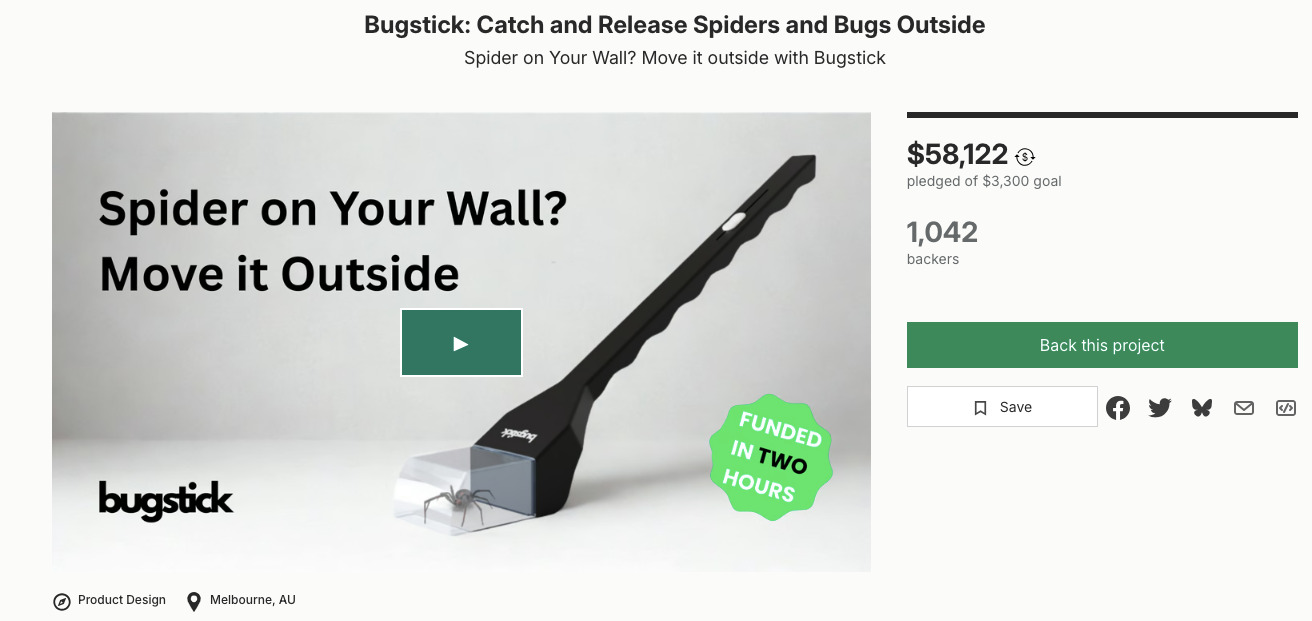
Bugstick: Catch and Release Spiders and Bugs Outside reached full funding in under two hours. The campaign went on to raise $58,122 from 1,042 backers, with strong early momentum helping drive visibility and discovery on Kickstarter.
Fast funding tells Kickstarter:
“People want this right now.”
That’s why many top campaigns deliberately set strategic base goals instead of aiming too high at launch.
2. Backer Count Matters More Than Total Money
Another common misconception is that Kickstarter only cares about how much money you raise.
In reality, the number of backers often matters more than the amount pledged.
A campaign with:
- 1,200 backers pledging $50
will usually outperform:
- 60 backers pledging $1,000
Because a high backer count signals broad appeal, and Kickstarter wants projects that resonate with many people, not just a few big spenders.
This is why early-bird rewards and entry-level tiers play such a big role in ranking.
3. Early Momentum: Why the First 72 Hours Matter So Much
Kickstarter pays close attention to your campaign’s launch window.
The first 24–72 hours influence:
- Discovery placement
- Category visibility
- Trending eligibility
Campaigns that launch strong tend to stay visible longer, while slow starts are hard to recover from.
This is why experienced creators never rely on kickstarter traffic alone.
Instead, they launch with:
- Email lists
- Pre-committed backers
- Warm audiences ready to pledge
You can see this emphasized in many professional crowdfunding breakdowns, including LaunchBoom’s prelaunch strategy guides.
4. Consistent Activity Keeps You Ranking
Kickstarter doesn’t just measure spikes, it watches consistency.
Campaigns that continue to receive:
- Daily pledges
- Comments
- Updates
tend to remain visible longer than campaigns that go quiet after launch day.
Flat days send a negative signal. Momentum decay often leads to visibility decay.
This is why updates aren’t optional, they’re algorithmic signals.
5. External Traffic Signals: Why Kickstarter Watches Where Your Backers Come From
Kickstarter can detect when traffic comes from outside the platform.
That includes:
- Email campaigns
- Social media
- PR articles
- Community posts
When Kickstarter sees quality external traffic converting into pledges, it interprets that as wider market demand.
This is the same principle Google uses when evaluating authority, as explained in its own search documentation.
Ranking Higher Leads to Trending (Not the Other Way Around)
Many creators believe trending is something you’re “selected” for.
It’s not.
Trending is the result of:
- Fast funding
- High backer velocity
- Strong conversion rates
- Ongoing engagement
Once your campaign ranks well internally, Kickstarter amplifies it by placing it in trending and discovery sections.
Trending doesn’t create momentum; momentum creates trending.
Common Mistakes That Kill Ranking
- Launching without a prelaunch audience
- Setting unrealistic funding goals
- Relying only on Kickstarter traffic
- Poor reward pricing
- Ignoring updates and comments
Even great products fail because of these issues.
How Serious Creators Engineer Kickstarter Ranking
Creators who consistently rank higher don’t rely on luck.
They focus on:
- Prelaunch audience building
- Strategic funding goals
- Reward tier psychology
- Launch-day traffic orchestration
- Ongoing engagement strategies
This is where many campaigns struggle not because the ideas are bad, but because the system is misunderstood.
Where Boostfunders Fits In
Understanding the Kickstarter algorithm is one thing. Executing against it is another.
Boostfunders works with creators to:
- Build pre-launch momentum
- Generate high-intent backer lists
- Drive early funding velocity
- Optimize pages for conversion
- Sustain momentum after launch
This approach is designed specifically to trigger the Kickstarter algorithm, not fight it.
Conclusion
The Kickstarter algorithm isn’t a mystery, and it isn’t random. It’s a performance-based system designed to surface projects that show real demand, real engagement, and real momentum.
Campaigns that rank higher and trend faster aren’t lucky, they’re engineered. They launch with an audience already waiting, generate early funding velocity, attract a high number of backers, and sustain activity through strategic promotion and conversion-focused pages.
Chasing features or hoping Kickstarter will do the work for you often leads to disappointment. The platform rewards creators who bring energy to the ecosystem first.
For creators who want to remove guesswork and launch with intention, working with experienced professionals like Boostfunders can make the difference between struggling for visibility and building a campaign that ranks, trends, and converts.